©Travel Photo Interact – Place your cursor over any photo to enhance it – click to enlarge.
 The Province of Québec, Canada has so much to offer the global tourist that we found the best way to present the many vacation options was to separate them into several categories; this story zeroes in on just one of Québec’s major attractions – lighthouses.
On the trail of the lighthouses
North America’s most spectacular lighthouse trek is in Canada’s Le Québec Maritime, which is located along the Gulf of St. Lawrence, and the St. Lawrence River. Central to the Maritime region is the Gaspésie (or Gaspé) Peninsula and that is where our adventure begins.
Getting there
We flew non-stop from San Francisco to Montréal on Air Canada. It was a long flight and we were happy to arrive at the modern Trudeau International Airport, and even more pleased to be able to walk to the convenient and stylish Marriott hotel located right there in the airport building next to the US Departures Terminal.
After a quick dinner, we were off to bed – anxiously looking forward to continuing our venture with the rise of the sun.
The next morning we took an Air Canada Jazz flight on a small aircraft to the quaint town of Gaspé, which is situated at the easternmost end of the Gaspésie peninsula and about 575 miles northeast of Montréal.
There we met up with friends who had already secured a mini-van and within minutes, we had our luggage aboard and were off on our search for accessible lighthouses.
There are 43 historic lighthouses in the Québec Maritime, but not all are easy to reach, or open to tourists.
Our goal
Twenty lighthouses in the Maritime have been restored and/or converted to museums, lodging, and otherwise made available to the public. We were eager to explore and photograph as many of them as our short visit would allow.
As we drove, it did not take long to realize that all of our subjects were located in gorgeous natural surroundings thick with boreal forests and vistas of the sea. At every turn, the scenery was breathtaking, and we were fortunate to be blessed with ideal weather to enjoy our outing.
Forillon National Park
 Our first stop was at a large and spectacular park not far from the town of Gaspé. At the Grande-Grave Heritage House at Forillon Park, we met up with Ranger Bruce O’Connor who is a wealth of information about the area.
Ranger Bruce introduced us to the local flora and fauna, and pointed out the interesting irregularities of the topography of the park.
 We also learned that this area is rich in the history of 20th century fishermen and merchants. You can read all about the history and culture on the park’s website linked above.
 Tourists can easily spend days exploring the vast Forillon Park, and if you decide to do that, there are convenient overnight accommodations right in the park. There are over 350 campsites, and if you aren’t ready for the fun of sleeping on the ground, try a Yurt, or tent trailer, both are available for rent in the park at reasonable prices.
Forillon was the place where we saw our first lighthouse
 The Cap Gaspé, was established in 1873 and at 30-feet in height is short by lighthouse standards. However, there was no need for it to be tall because it is perched atop a high cliff overlooking the great St. Lawrence.
 In the same park, you will also find Canada’s tallest lighthouse (112-feet) from 1858, the Cap-des-Rosiers. This light was constructed at a considerably lower elevation that has easy access to the sea.
Both lighthouses are in excellent condition. Canada takes great pride in the upkeep of their historic lighthouse treasures.
“Thar she blows”
 This entire area is a vast causeway for migrating whales of many species, and we were able to see several of the magnificent animals from the Cap Gaspé cliffs.
Back to Gaspé for dinner and a rest
 This is an article about lighthouses so we will not dwell on the inns where we stayed – except for this one. We spent our first night at the charming (circa 1860) Auberge William Wakeham in Gaspé.
 This is a vintage inn that has been scrupulously maintained by generations of owners. The restaurant ambiance is uniquely European in flavor and the food – oh my – is regionally famous and rightfully so. There are scrumptious mains from local waters and ice cream and deserts made on site. Yummy!
The 132
In the morning, we were back on Canada Route 132, the signature highway of the Lighthouse Tour that circles the Gaspé Peninsula. There are at least 15 lighthouses on this scenic drive that runs along the entire coast of the peninsula. The 132 is rich in photo ops of colorful villages, cliffs, beaches, capes, and of course – lighthouses.
Pointe-á-la-Renommée lighthouse
 Established in 1880, this 49-foot charmer is called the most traveled lighthouse in the world having been moved to and from its present site. It once resided in the Port of Québec for 20-years. It was returned in 1997.

The museum on location is not to be missed. This was the site of the first North American maritime radio station installed by Marconi in 1904. The grounds are as spectacular as the seemingly endless views. This is another place where our day passed too quickly. We want to return.
La Martre lighthouse
 The La Martre is located in a quiet setting near a church overlooking a panoramic coast. This 63-foot tall lighthouse was constructed of wood in 1906. It is a rare treat to see because most wooden lighthouses ceased to exist years ago. The lighthouse still works with the original cable and weight system that operates the illumination mechanism.
Pointe-au-Pére lighthouse
 This is the site of Canada’s worst maritime disaster, the sinking of the passenger ship Empress of Ireland on May 29, 1914. One-thousand and twelve lives were lost.
Resting in just 130 feet of water, the old wreck has taken many more lives through the years. Subsequent deaths were mostly recreational scuba divers who put themselves in harms way by entering the wreck seeking treasures. It is now forbidden to enter the wreck of the Empress.

The original lighthouse at this location was built in 1859, followed by three more, the latest and final rendition is 108-feet tall and was completed in 1975. It was deactivated in 1998.
The current structure is one of the tallest lighthouses in Canada with 128 steps to climb – if you are game. For those who dare, a breathtaking view of the St. Lawrence River awaits you – if there is no pea soup fog.
The Pointe-au-Pére was the last lighthouse we had time to visit on our short four-day trip. We took the time to thoroughly investigate five lighthouses, but there are so many more to see. We will make it a point to add more days to the lighthouse tour on our next visit to Le Québec Maritime.
The ferry to Forestville
We decided to explore, albeit briefly, the north shore of the St. Lawrence River before returning to Montréal and our flight home. We took a pleasant ferry excursion to Forestville from Rimouski. The crossing was complete in about one-hour.
The van was unloaded in short order we were driving to Baie-Comeau and the Garden of the Glaciers. The Garden is another of Québec’s attraction that deserves its own story, so we wrote one. You can read our article about that exciting family experience by clicking on http://is.gd/caZNCg
We highly recommend the Québec Maritime for a fun-filled fly and drive vacation. There is so much to do and the sightseeing is terrific.
To see more photos from our lighthouse tour click *here.*
If you go
To avoid disappointment, we suggest you arrange your vehicle rental and accommodations before you arrive in Canada.
For more information about what the Québec Maritime has to offer, check out their great website: http://quebecmaritime.ca.
Take special note of their unique self-guided tours.
Happy travels!
© Travels with Wayne and Judy Bayliff
Photos © Wayne and Judy Bayliff
You can see the world with Google Maps. http://maps.google.com/

















 We had not been on a train in years, so when invited to experience a weekend getaway on the rails that was “drive free,” we jumped at the opportunity. The adventure entailed making our way to the Diridon Train Station in San Jose, California, and boarding the southbound Amtrak Coast Starlight train bound for Santa Barbara. Here’s how it all went:
 Coast Starlight passengers are allowed to check two bags each, with similar baggage
  Our Amtrak Coast Starlight train departed on time at 10:07am. We booked a “roomette” accommodation in what is called a Sleeping Car. The roomette amounted to a small compartment with two facing cushioned chairs that recline into a bed. There was also an upper drop-down bunk bed enclosed in the ceiling for the use of a second passenger. We had a nice window to enjoy the view, and there were curtains and a door to shut out the world if we so desired.
 We spent most of the day in comfortable swivel chairs in the upper-level Pacific Parlour Car. Wide windows gave us first-class views of the abundant scenery.
 Sleeping Car passengers receive complementary meals and can reserve eating times in either the Pacific Parlour Car, or Dining Car. The train’s *
 We tried a number of offerings from the menu, and highly recommend the Angus burger – it’s full-flavored and delicious.
 Our Amtrak train arrived at the Santa Barbara station on-time at 5:55 pm. The station is small, and was quiet upon our arrival.
 Centrally located in downtown, the Hotel Santa Barbara is a quaint boutique style hotel with an interesting history. Originally built in the late 1800s, the hotel was destroyed in the 1925 Santa Barbara earthquake. It was quickly rebuilt and became a luxury accommodation for the likes of Clark Gable and Carol Lombard who were frequent guests.
 Slowly losing traction over the years, the hotel was again revitalized in 1996 when the 75 room establishment became the elegant focal point for the renaissance of downtown Santa Barbara.
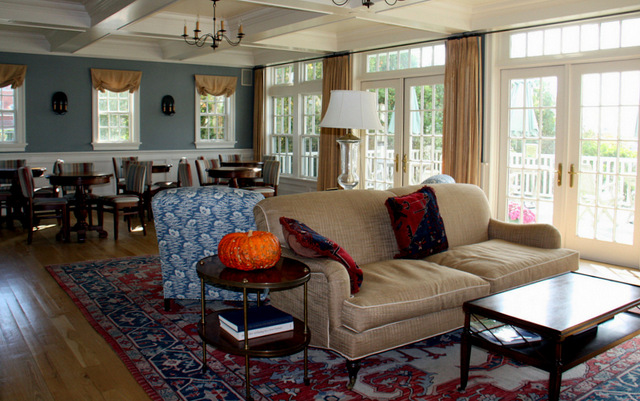
 Today, the quietly sophisticated hotel offers small groups a place to stay and meet while visiting the many attractions of the city.
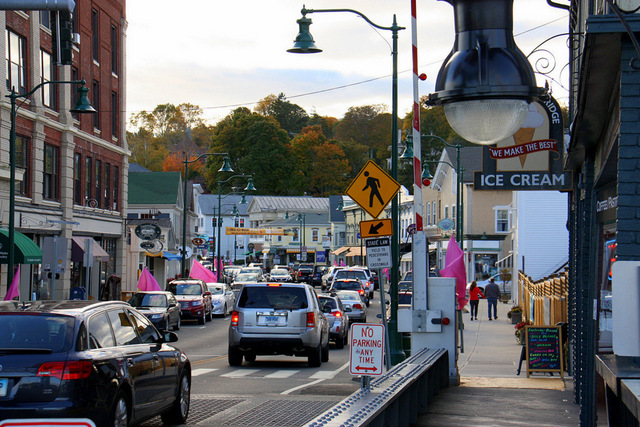
 After settling into our comfortable and spacious guestroom, we took a walk along State Street and window shopped the many specialty retailers that line the cosmopolitan thoroughfare.
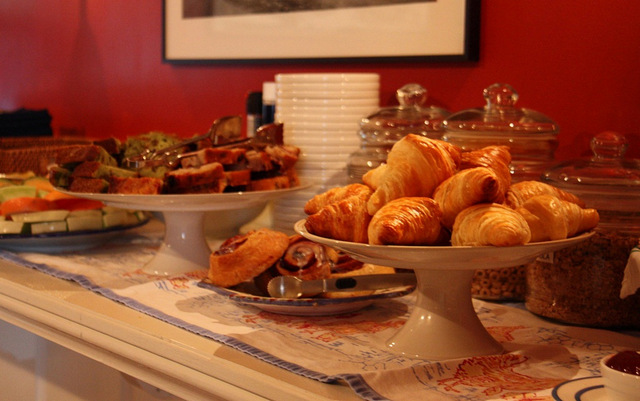
 It was a typically beautiful Santa Barbara morning, and after a filling Continental Breakfast provided by the hotel in their spacious Mediterranean lobby, we began to think about the best use of our day.
 Claire Ihlendorf-Burke, our congenial guide, handed us a menu of delectable south-of-the-border treats. We chose the beef tacos.
 Not expecting a large amount of food on a tour, and certainly not expecting the biggest and best ever tacos, we tucked away all of the plenty that was offered in short order. The only problem was that this was the first “tasting” on the tour, and we had no idea how we could possibly eat anything more that day – but, somehow we managed.
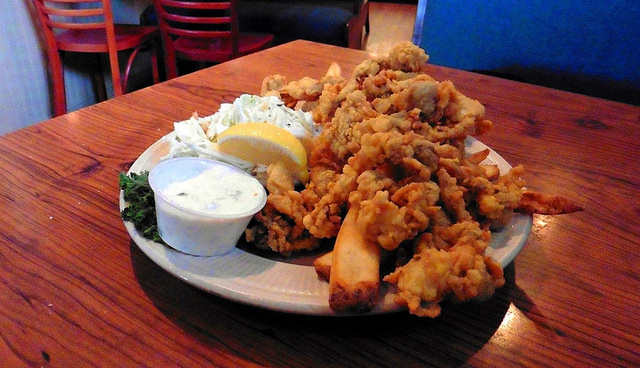
 We were able to scrape the bowl of delectable lobster bisque at the Enterprise Fish Company,
 and enjoy the grape’s bounty at the Santa Barbara Winery in the hip, but understated
  What saved us from intake overload were the short walks between the seven sample foods and beverage stops. The entire tour takes a little over three hours and covers about two-miles.
 Claire knows her city well, and she showed us the interesting back streets, urban wine trail, and fine examples of Spanish Colonial Revival architecture, for which the city is famous.
 Our tour ended at McConnell’s Fine Ice Creams, an artisan creamery with delicious sweets.
 We highly recommend
  Before boarding our train to return to San Jose, we took a walk to see the Santa Barbara Courthouse and Sunken Gardens on Anacapa Street. It is worth a visit…
 and the view from the clock tower is breathtaking.
 We also enjoyed the colorful farmer’s market that literally took over State Street the morning of our departure. The market provides residents and visitors an opportunity to purchase farm fresh produce of the highest quality.
 In terms of space and seats aboard the Coast Starlight, coach accommodations are akin to First Class space aboard most domestic airlines.


 TheNationalMotorist.com